Span of Control Explained: Meaning, Structure, and Manager Effectiveness
What Is Span of Control?
In organizational design, span of control is a foundational concept used by HR and business leaders to evaluate management structure and effectiveness.
Span of control refers to the number of direct reports a manager oversees. A wide span of control means a manager has many direct reports, while a narrow span of control means fewer direct reports and often more management layers.
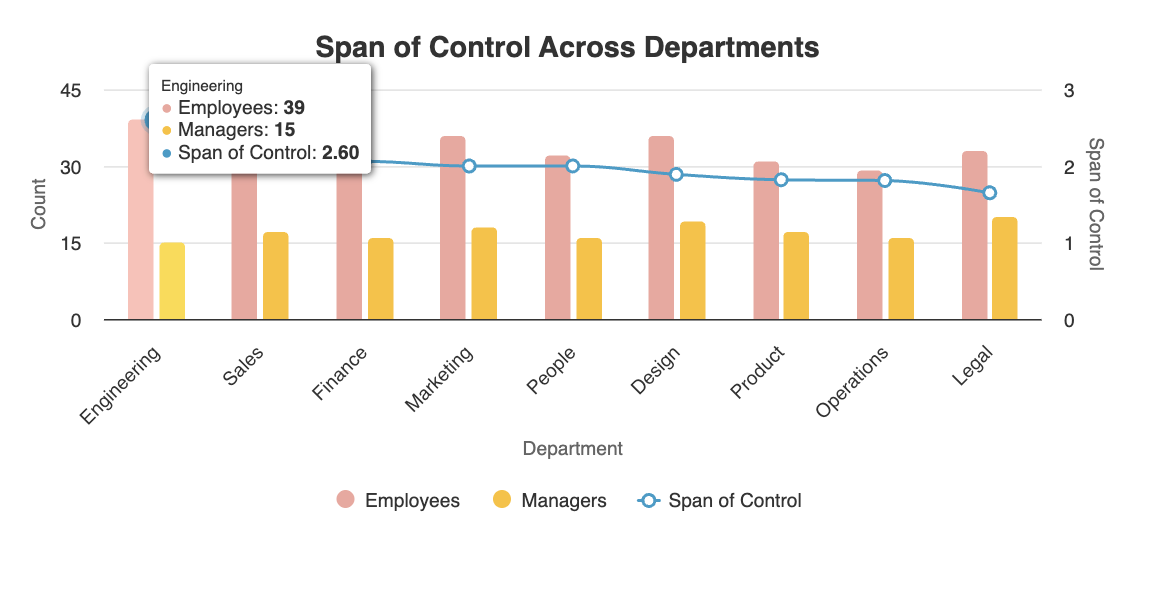
Understanding the wide span of control meaning is critical for modern organizations. A wider span can increase autonomy and reduce bureaucracy, but it can also strain managers if not supported by the right systems, data, and processes.
Span of Control and Its Relationship to Hierarchy
Span of control directly shapes organizational hierarchy. Narrow spans typically result in taller hierarchies with more layers of management. Wide spans flatten organizations, which can improve speed and collaboration, but only if managers are equipped to lead effectively.
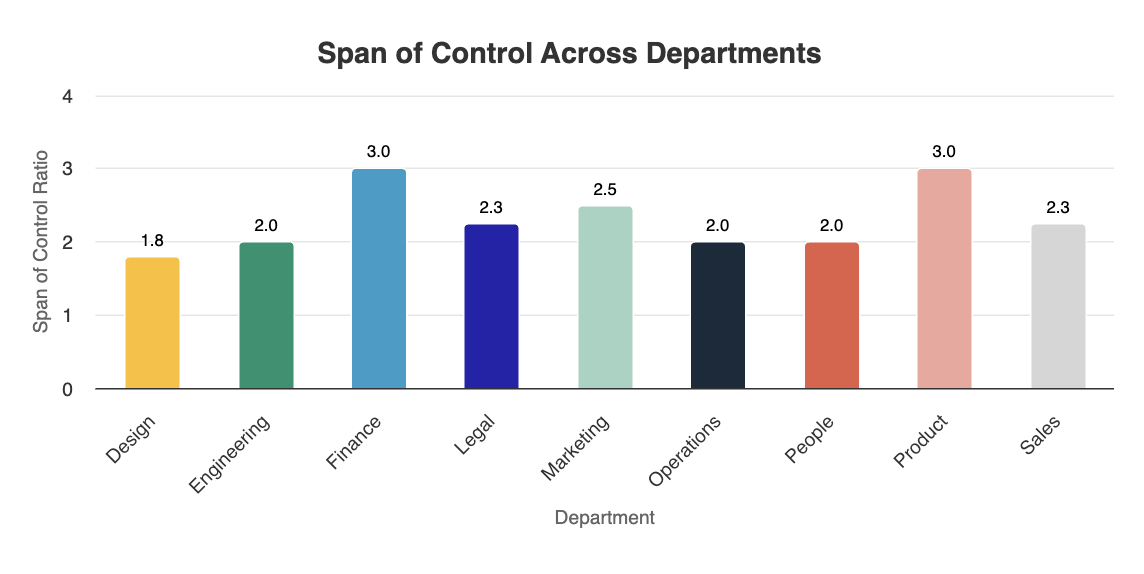
Without visibility into workload, performance, and team health, wide spans of control can lead to burnout, inconsistent coaching, and missed risks. That’s where data-driven insights become essential.
When a Reduction of Span of Control Makes Sense
Organizations often pursue a reduction of span of control during periods of growth, restructuring, or performance challenges. This can be a strategic move when:
Managers are stretched thin across critical roles
Teams require more hands-on coaching
New or less experienced managers are stepping into leadership roles
However, reducing span of control without understanding the downstream impact on headcount, cost, and productivity can create new challenges.
Using Analytics to Support Manager Effectiveness
A strong manager effectiveness program relies on more than intuition. By analyzing span of control alongside engagement, performance outcomes, and attrition risk, HR and people leaders can identify where managers need support, and where structure changes will have the greatest impact.
Illoominus helps organizations visualize span of control across teams, layers, and functions so leaders can make informed decisions that balance efficiency with effectiveness.